Background & context
Lenskart launched Sonic, a 2-hour eyewear delivery service, with a pilot darkstore (DEL1) in Delhi. Unlike standard Lenskart orders — fulfilled from a plant over days, across different stations — Sonic requires the entire process of frame picking, lens cutting, fitting, QC, and handover to a delivery rider to be completed within a single 2-hour window.
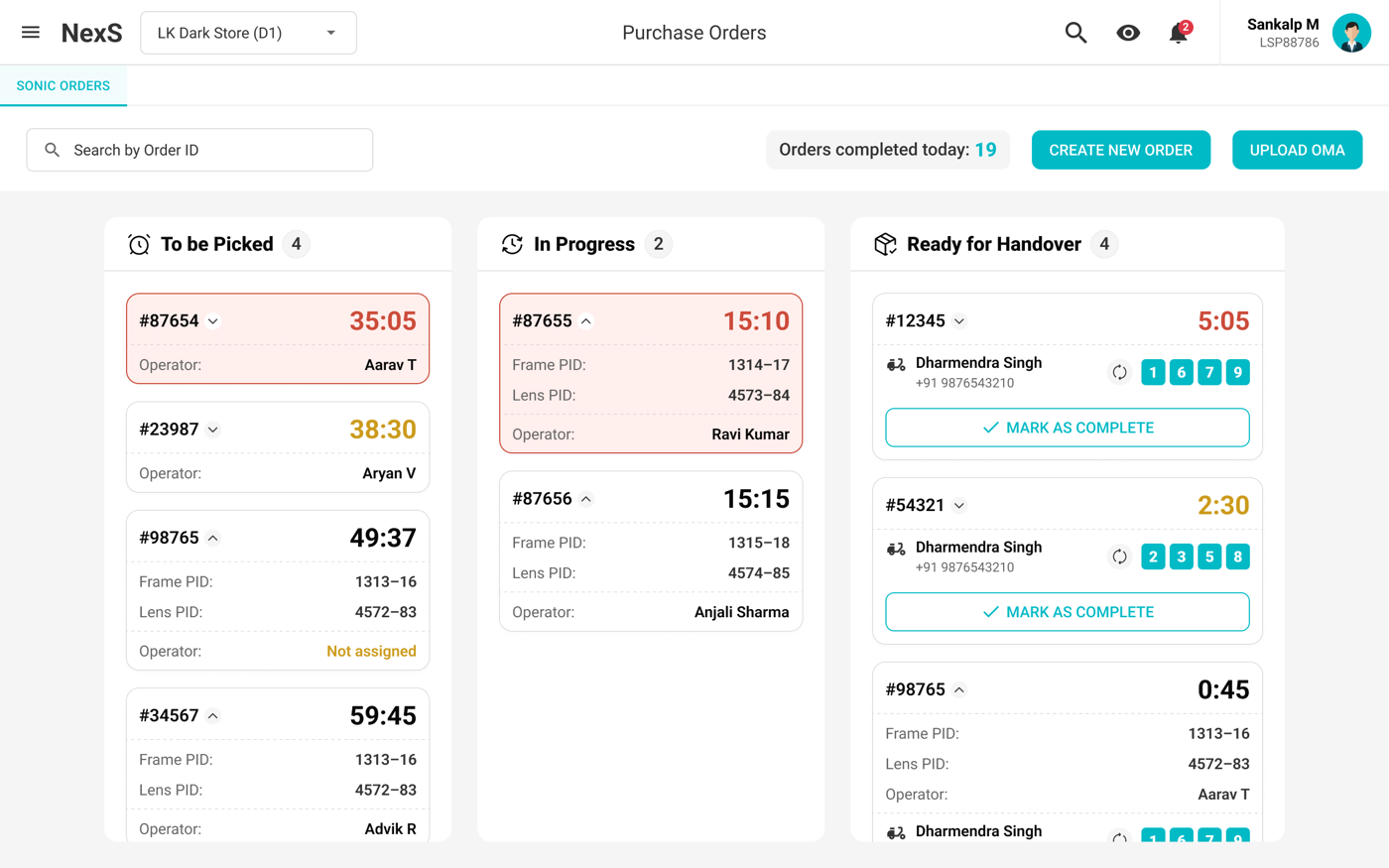
The operator portal it inherited was built for standard fulfilment: a table-based order management interface where operators periodically check for new work. That passive model is fundamentally incompatible with Sonic’s time-critical nature.
Core problem
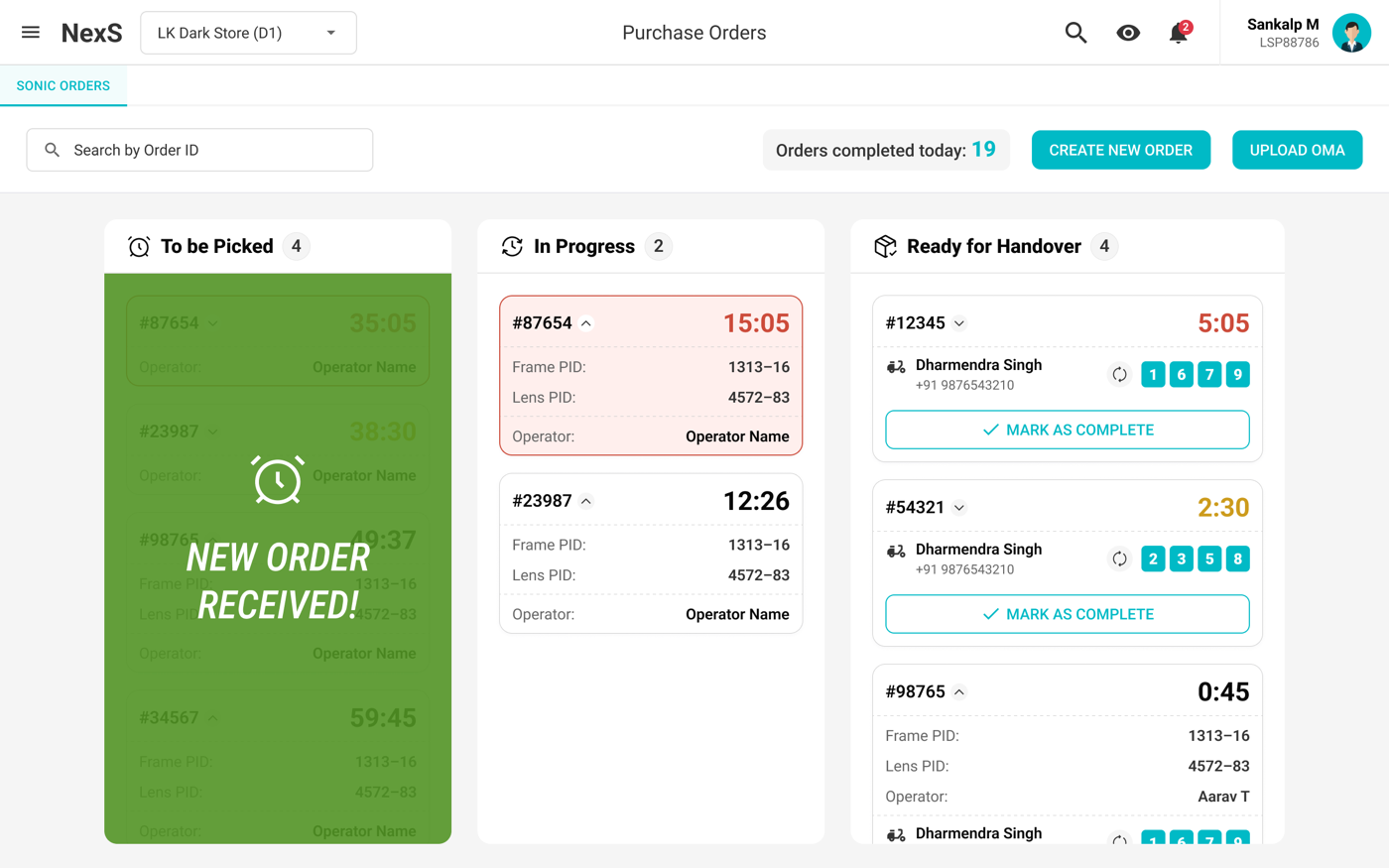
The operator has no active signal that a new Sonic order has arrived — they must notice it themselves by watching the portal. In a 2-hour SLA, every minute of delayed pickup compounds downstream: a 10-minute delay at the start leaves only 110 minutes for lens cutting, fitting, QC, and last-mile delivery.
My role
I led the design for this feature — an operator experience built around active signals and countdowns instead of passive tables.
Some snippets